5.4 Conversation with a Friend

Record a real conversation with a friend. (It’s up to you whether you ask permission or not!)


Before listening to the recording, write your account of both sides of the conversation. Then listen to the recording and make note of the discrepancies. Perhaps there are unfinished sentences, stammers, pauses, miscommunications etc.
Reflect upon the believability of re-enacted narratives and how this can be applied to constructed photography. What do you learn from the conversation recording process and how can you transfer what you learned into making pictures?

Lessons Learned

Upon replaying the conversation I recognised that whilst I had my own interpretation of the discussion and the salient points, actually more things were discussed than I had remembered. Whilst I hadn’t remembered all of the detail I felt that the conversation was relaxed and enjoyable. I felt good afterwards.

Reflection

My understanding was based on a real time conversation. We have conversations every day and take for granted what is a complicated process. It takes concentration and a lot of brain power to keep track of a conversation thread whilst we translate the words into meanings, recognise and understand inflection, tonal changes, hand gestures and facial expressions.

The process of understanding the dialogue requires cultural and linguistic knowledge. Our understanding of language includes embedded semiotic codes such as; semantic codes which describe a hidden but generally accepted meaning or symbolic codes, denoting or connoting an object or its qualities.

With all this going on it is not surprising that we don’t remember everything that is said during a conversation. We latch on to what we think are the main points, but these are affected by our perspective or point of view. Our perspective is created from our lived experience, it is the sum total of all our memories and experiences. It is further affected by our current surroundings and circumstances.

The process of re-enactment relies upon a recognition or understanding of an original event or object. All such understanding is, however, flawed due to the above. Technically no re-enactment will ever be an accurate depiction of an original.The use of Semiotics within the constructed or re-enacted image is a good method for creating narrative within the tableau. In addition to the semiotic codes mentioned above , visual codes include Proairetic (or action codes), and Hermeneutic Codes (or Enigma Codes) can also be used.

A re-enacted narrative within photographic art leverages our process of understanding. It recognises that our perception at any point in time is influenced by our individual perspective. When viewing the still image each viewer’s perception will be different. If a photographic image is presented in the form of a triptych, a series of images displayed on a gallery wall or within a book, our appreciation of each image is affected by our understanding of the preceding, thus creating narrative across set. The images in Robert Frank’s book The Americans are presented in a particular order and the viewer requested to view them accordingly. Jack Kerouac likened the order of the images to a visual poem.

Where cinematic re-enactment of historical events might be broadly accurate the viewer understands that much of the underlying detail will be fictional. Nevertheless we accept the story and we are drawn into the narrative. We apply our own emotional and moral perspective, resulting our rooting for the hero, disliking the villain and feeling empathy for the characters. The same perspective can be applied to the still image.

Francesca Woodman

Susan Bright said of Wooodman’s work “It is difficult not to read Woodman’s many self-portraits – she produced over five hundred during her short lifetime – as alluding to a troubled state of mind. She committed suicide at the age of twenty-two.”
(Bright, 2010, p.25)

220px-Francesca_Woodman_self_portrait

Reflection

When viewing Woodman’s images I do find them disturbing. They have a dark, moody and chaotic appearance. I am reminded of Diane Arbus who’s images of societies marginalised groups also had a rather uncomfortable feel about them. Diane Arbus also committed suicide, so is this need or drive to produce images that shock or disturb the senses an indicator of “troubled” mental health?                                          ghost

Woodman’s handwriting is included in a number of her images. Handwritten notes to her boyfriend and even scrawled on walls. Her writing style shares that chaotic appearance. There is no apparent effort to achieve uniformity or even correct spelling. Some of the messages to her boyfriend might also suggest low self esteem?

my house

Woodman is well known for including herself, often naked or partially clothed in her images. This alone isn’t uncomfortable viewing but he way in which her images present her form is. In this age of the selfie there are billions of self portraits on social media where the photographer / model is doing their utmost to display themselves as perfectly as they possibly can. Such images expose the ego and narcissism inherent in our human makeup.  When photographing yourself is it not normal to want to present the best version? Does deliberately depicting oneself in a unflattering or dismissive way suggest struggles with esteem or sense of self?  I believe that to depict yourself in this way is antithetical to ego or self worth and this could be considered by Bright as “a troubled state of mind”.

wallpaper

It is a matter of historic fact that Woodman killed herself at the age of 22 and this leads us (somewhat by the nose) to reach a retrospective conclusion that Woodman was a tormented soul and she used photography to express her pain.

But her parents would state otherwise and they, if anyone, would have known Woodman better than any art critic. In their interview in the Guardian they tell the story of a young (very young) hard working talented artist. One that modelled her own images because it made sense to do so as it meant she was unrestricted by the availability of others and unhampered by the need to convey her ideas verbally to a model. They dismissed the art establishment’s reading of her images as a representation of feminism and  pointed to the witticism and humour in her work. They described her life in this way; “she wasn’t a “deeply serious intellectual”; she was witty, amusing. “She had a good time,” says Betty. “Her life wasn’t a series of miseries. She was fun to be with. It’s a basic fallacy that her death is what she was all about, and people read that into the photographs”

Without hesitation I accept Woodman’s parents viewpoint. Woodman’s work appeared dark, but we should be looking not at the darkness but at how she manipulated and managed light. Her inclusion of herself in her images is well explained and has an authentic ring. I agree with her parents that we tend to focus upon her untimely end and allow that to colour our perception of her life.

References

Tate (n.d.) Francesca Woodman 1958-1981 [online] Tate. Available from: https://www.tate.org.uk/art/artists/francesca-woodman-10512. Last accessed 07/05/2020

Levy D (2018) Francesca WoodmanVanishing Act [online] Tate. Available from: https://www.tate.org.uk/tate-etc/issue-43-summer-2018/francesca-woodman-vanishing-act-deborah-levy. Last accessed 07/05/2020

Cooke R. (2014) Searching for the real Francesca Woodman [online] The Guardian. Available from: https://www.theguardian.com/artanddesign/2014/aug/31/searching-for-the-real-francesca-woodman. Last accessed 07/05/2020

o ego. 

The day to day life of Alfred Hastings

Briefly referenced in the Context and Narrative course material, I am really glad that I followed the link and discovered this thought provoking work.

Kaylyn Deveney spent time getting to know “Bert” (Albert) in his flat in south Wales whilst photographing him. Her photographs document Bert’s day to life but also the background to his life and living conditions.  Bert’s comments below each image add context to what I think is a gentle, sympathetic documentary of a period of Bert’s life. 

Deveney uses Relay text as an accompaniment to her images, but what is really enjoyable about them is that rather than write them herself she has asked Bert for his thoughts. Bert’s comments add complexity to the work in that they enable us to compare Bert’s perception of himself and his way of living to that of how others, including me as the viewer might see him. 

I really enjoyed reading Bert’s simple direct commentary, his perspective and images of his lifestyle reminded me greatly of elderly relatives and friends that I have known through my life. I drifted into nostalgic memories and reflected upon the lessons that we should be learning from our elders. I really enjoyed this work. 

Deveney describes it as:

“This work is sited where Bert’s autobiographical vision, based in life experience and feeling, meets the new eye of a stranger. Together our visions and versions of his day-to-day experience sit side by side to create a new tale. At the end of this project Bert and I, of course, maintained our individual perspectives, but I think we were richer, too, for being informed by one another. I know I am.”

References

Deveney K. (2007) The day to day life of Albert Hastings [online]. Kaylyn Deveney Photographer (website) Available from: https://kaylynndeveney.com/the-day-to-day-life-of-albert-hastings. Last accessed 24/04/2020.

2.4 Photographing the Unseen.

Exercise:

Research the following three case studies from Level 3 OCA students who have chosen to explore themes that are not necessarily visible. All use metaphor to portray their ideas rather than a more straightforward method of representation.

Peter Mansell – Paralysis

Pete suffered a spinal cord injury as a result of a traffic accident when he was 20 and has lived most of his life as a paraplegic. His projects deal with how his injury has affected his life.

Dewald Botha – Ring Road

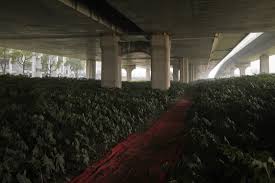
As a South African living in China, Dewald often felt like an outsider. He found the busy-ness and intensity of life in China smothering so began to use his camera to explore this personal issue. Ring Road is the outcome of this visual exploration and the resultant images portray a searching for beauty or relief in a place of difficulty.

Jodie Taylor – Childhood Memories

Jodie Taylor’s work deals with nostalgia, which at first may seem like an un- photographable subject. She got around this problem by revisiting her childhood area and photographing it in a way that marries her memories and family history with her present interaction with those formative places. The outcome is a visually consistent and poignant view of her childhood. The subject drove her photography, not the other way around. The final presentation consisted of 6×4 photographs presented in the sort of flimsy plastic family album she’d have had at home. Read more about Jodie’s work here:
www.weareoca.com/photography/photography-and-nostalgia/

All three of these projects are examples of personally driven work but they become universal when we can relate to the feeling they present by visiting our own personal histories.

1. Which of these projects resonates most with you, and why?
2. How do you feel about the loss of authorial control that comes when the viewer projects their own experiences and emotions onto the images you’ve created?

Research

Peter Mansell – Paralysis


masell1

Presented as a photo book and a website. powerful, thought provoking, images of the individual items that make up Mansell’s world. Some of the images are difficult viewing. The titles of each chapter of the act as a relay which steers the viewer to an understanding of what they are looking at and the context within which they should be considered. As I viewed the images and read the associated text Mansell’s images conjured the feelings of frustration, loss of freedom, of planned future and the bitter sadness and concern for the future that I can only assume disabling conditions bring in waves.

Mansell has an extensive portfolio online over several individual websites. They are all navigable from a central landing page (listed below) The images in his photographic essay can be expanded by clicking them. Each expanded view provides explanation text below. I felt with this work that the metaphorical message of the image was better served by not reading the text.

Mansell P. (2016) Peter Mansell Imagery (online), Weebly.com website, available from: https://paralysed.weebly.com/#, last accessed 09/04/2020.


Dewald Botha – Ring Road

Botha1


Botha’s extensive portfolio is available in part on his website

Botha’s images tend to be, rather like Mansell’s, images of multiple individual elements that fit together to make a whole. It is the sum total of the images that give rise to the understanding of the work and the feelings they convey. I spent some time viewing several of Botha’s projects, in them he questions what places mean by showing us so many versions of the place that I initially questioned how they could possibly fit together other than by being located in the same geographic location. I  noted that Botha treated these urban images in a similar way to which a landscape photographer captures a scene in that all that is captured is landscape. There are signs of man’s mark on the world but no sign of man, or beast for that matter. No distractions from Botha’s aim of capturing the essence of the place.

Botha D. (2013) Ring Road [online] DEWALD website, available from: https://www.dewaldbotha.net/ring-road.html,last accessed 09/04/2020.

Jodie Taylor – Memories of Childhood.

taylor3

Taylor’s work resonated with me more than the examples above. Not because of the powerful subject matter, if it were merely subject matter then Paralysis would be my choice, but Taylor’s work resonated most because she took me back to my childhood.

I first came across Taylor’s images whilst completing the “Expressing Your Vision” module. The photographs, which Tayor cleverly presented took look as if they were taken in the 1970s,  immediately took me back to my childhood and with that evoked memories of days spent out on my bicycle with friends, exploring new neighbourhoods, endless panel fenced and walled footpaths and garage blocks with “up and over” metal doors. Memories of my parents, since departed. Memories of friends that I have lost contact with, and memories of the freedom that existed for children of the sixties and seventies.

Taylors work inspired me to go back to the village of my childhood. I went back there in 2019 to reminisce and whilst there to visit old neighbours who had stayed. I spent the remainder of the day wandering the nostagia steeped footpaths and pathways of my youth. Much had changed in the sleepy village that I called home for so many years but it’s essence remained. Obviously, I took my camera and recorded images for my personal collection. Many had similarities to those of Jodie Taylors. I remain grateful to her for inspiring me to return.

Lomas M. (2015) Jodie Taylor [online], Open College of the Arts website, Available from: https://www.oca.ac.uk/weareoca/photography/jodie-taylor/, Last accessed 16/04/2020

n.k. (2013) Photography and Nostalgia [online], Open College of the Arts website, Available from: https://www.oca.ac.uk/weareoca/ photography/photography-and-nostalgia/, Last accessed 16/04/2020


Lack of Authorial Control?

When I started learning with the Open College of the Arts, working on the first module of my course “Expressing Your Vision” my tutor questioned my choice of adding titles to all of my images, suggesting instead that it might be better to allow the viewer to find their own meaning. I had never considered such a option until that point. In fact I had added titles because I wanted to direct the viewer towards my way of thinking, to the meaning that I had intended.

Since then, and thanks to my tutor, I have allowed the viewer the opportunity to read into my images whatever their past, their current circumstances, social or political views or their environment suggest.  Dictatorial messaging has its place, in news media, adverts, government messaging etc. But I do not need or want to dictate meaning for my images. Images that allow the viewer to have their own emotional or intellectual response are far more powerful and are meaningful to many many more people than those that are closed and heavily anchored. My preference would be for the lightest of relay text where necessary.


From 250 to 14 Images (my selection workflow)

When photographing people in a reportage style I take a lot of images. It is important to capture the emotion of the moment and it can be easily lost if the subject of the photograph is blinking or the expression on their face is not right.

For my first assignment in the Context and Narrative unit I took approximately 250 images, these images were eventually distilled down to approximately 14. To achieve this  I applied the same workflow that I use for the majority of my work. It flows something like this:

  1. Import the images from the SD card onto the computer hard drive.
    1. Use Adobe Lightroom importer and catalogue to store the images in an appropriately named folder, such as: Pictures/Photography Coursework/PH4CAN 1/The Photograph as a Document/A1 Two Sides of The Story/
    2. Rename the images to reflect the subject (Subject Name (HK) – 001 etc.) this is a new step suggested by my tutor.
    3. Add the files to a new collection with a recognisable name and sync the collection with the Adobe Cloud so that I can access or edit the images from other devices.
  2. Print (to JPEG) all of the images as a contact sheet and save in the same file structure.
  3. Cull any poor images, such as those where the focus has been missed or the subject is blinking etc.
    1. Double click the first image and then using arrow keys to go through every image. Images that meet the “poor” criteria mark for deletion (“x” key)
    2. Complete the cycle twice, reviewing the decisions and then delete the images.
  4. Repeat the process using the star ratings to identify possible selections
    1. Use the number keys 1 through to 5 to markup each image according to the following key: 3 stars = Possible  4 stars = Good  5 stars = Best
    2. When marking up the images consider the brief and how each image might suit it.
    3. Repeat the cycle several times to be sure that the selection is correct
  5. Filter out all but 5-star images and review them again as above.
    1. Be ultra-critical. Any that may not make final images reduce to 4 stars until you have a small number of final images.
    2. Sleep on it
  6. Consider the brief and review the final images in the context of the brief.
    1. Further refine the final images.
    2. Review the 4-star images and look for any the might be promoted. Consider how these images might add further interest to the essay or improve upon it.
    3. Review the 3-star images and look for any that might be promoted.
    4. Sleep on it (time permitting)
  7. Edit the “final Images” in the develop module
  8. Export the final images as JPEGs into a subfolder to the original entitled “Finals”
    1. I have created a preset save function to do this which sizes the images to OCA recommendations

I have found that it is easier at the initial stage to remove images that you don’t want to use rather than choose those that you do. It is far faster and it is easier to be highly critical than it is to choose “best” images.

I have stopped documenting my workflow here at the point at which the images could be used on my Blog posts. For images that are to be printed I have a separate workflow which includes image proofing, further editing and test printing for colour matching.


Do images of war provoke change?

https://holliwomble2.home.blog/

Brief:

Do you think images of war are necessary to provoke change? Do you agree with Sontag’s earlier view that horrific images of war numb viewers’ responses? Read your answer again when you’ve read the next section on aftermath photography and note whether your view has changed.

My Initial View:

[CAUTION] this article contains a graphic image that some people may find upsetting or disturbing.

In short No! In my limited experience of the times when our country has been at war the photographic evidence from that war, whether action or aftermath has stirred the social conscience but society had very little to do with any decision regarding war. I watched both Margaret Thatcher and Tony Blair take us to war. In both cases “the people” did not have a say. We had no say in when the wars ended either. My personal perspective is that I shied away from the terrible images of war shown on television news because they were upsetting to see yet I was powerless to do anything about it.

I agree with Susan Sontag’s opinion that our species suffer from “compassion fatigue” or numbness when continually confronted with images of death, destruction, violence or natural disaster. In a very short space of time, it seems that everything exists has been photographed at least once. In fact, everything that exists has probably been photographed numerous times. Such is society’s need for stimulation that from one “terrible” image to the next we demand “better”, be that more detail, more suspense or more horror and when better isn’t possible we turn to the next best thing – “more”.

Compassion Fatigue appears now to also have become a possible medical diagnosis. (Carter S. B. 2014) This use of the term is different from Susan Sontag’s in that Carter describes the compound effects of the stressful life we live in the world of 24/7 news and media and how this impacts our entire life. Upon reflection, I wonder if this numbness and ability to normalise abnormal sights, events or positions is part of being human. It protects us from distress and helps us to function in difficult moments of our lives. Perhaps it is this capacity and our ability to adapt that has made us such a successful species? The medical diagnosis of compassion fatigue appears to address those of use for whom the natural protective response to one situation followed by several more accumulates to overburden us.

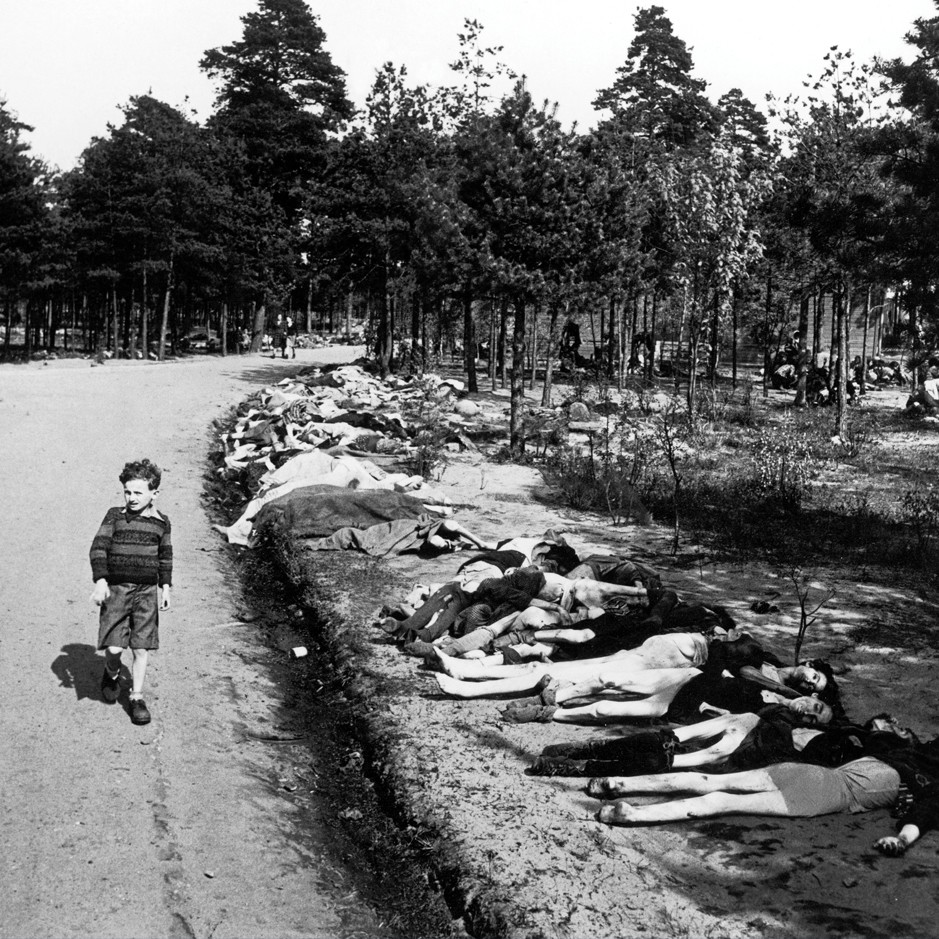
The image below, of 7 year old Jewish boy Sieg Maandag walking through the Bergen-Belsen Concentration Camp past lines of dead bodies, apart from showing us the appalling things that we humans can do to one another,  demonstrates just how we are able to become numb to and to normalise the atrocities we see in order to survive. This boy was well aware of his surroundings but he had come to accept them.

90
A small boy strolls down a road lined with dead bodies near the Bergen-Belsen concentration camp, 1945.
George Rodger—The LIFE Picture Collection/Getty Images

As I view this image today seventy years after the event from my relatively cosseted comfortable existence I am truly horrified and struggle to look. But I recognise that if I was confronted with another image and another on a daily basis I would eventually normalise the scene as did this young boy.

References:

Sontag, S. (1973) On Photography. Kindle Edition. Picador. New York.

Klingenstein, S (2014). Zero Hour. [Online] The Weekly Standard. Available from: https://www.weeklystandard.com/susanne-klingenstein/zero-hour. Last Accessed 30/05/2019.

Carter, S.B. (2014). Are You Suffering from Compassion Fatigue? [Online]Psychology Today. Available from: https://www.psychologytoday.com/gb/blog/high-octane-women/201407/are-you-suffering-compassion-fatigue. Last Accessed 31/05/2019.

Cosgrove, B. (2013). At the Gates of Hell: The Liberation of Bergen-Belsen, April 1945. [Online] Time Magazine. Available from: http://time.com/3679103/at-the-gates-of-hell-the-liberation-of-bergen-belsen-april-1945/. Last Accessed 31/05/2019.